Download the report
Access industry insights, benchmarking data, and trends shaping patient services in 2026.

Our Best-in-class benchmarking evaluates patient services across experience, operations, and investment. Using proprietary data and comparators, it highlights friction points and improvement opportunities to drive stronger therapy initiation, adherence, and program impact.
Comparative insights are essential because the barriers patients face is often invisible without a relative lens. Consider these market realities:
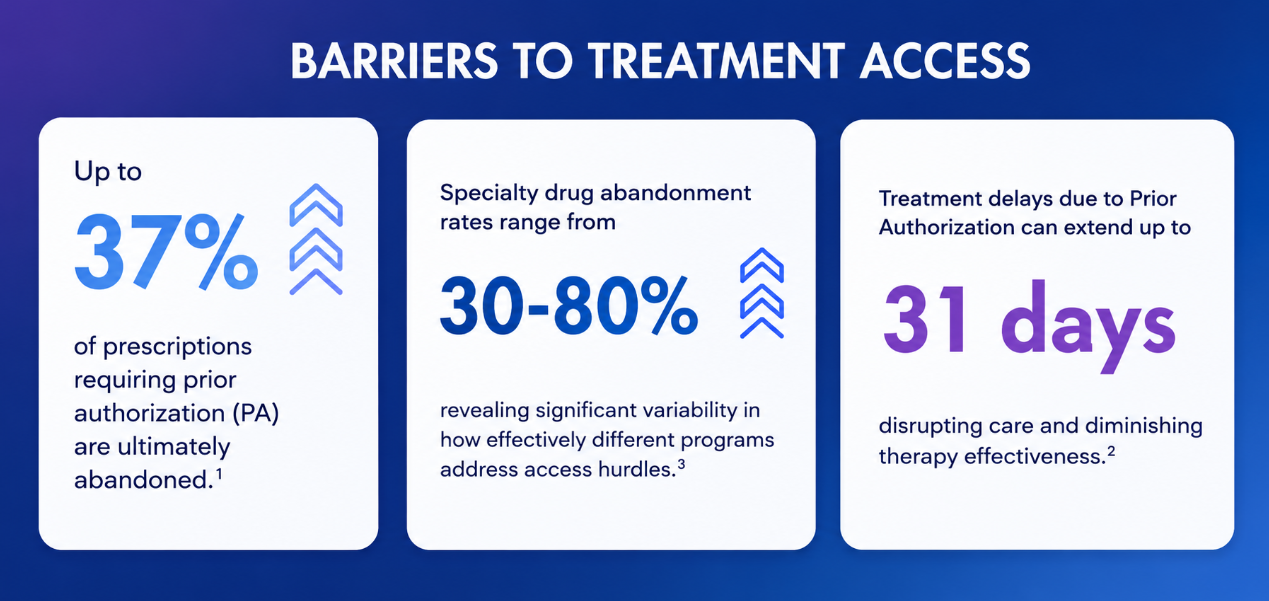 References ¹ ² ³ listed at bottom of page
These variations are not accidental, they stem from meaningful differences in program design, service quality, operational execution, and cost. Understanding where your program falls on that spectrum is key to unlocking better outcomes.
When done right, benchmarking does more than show how you compare. It reveals where and how to improve. Acumetis’ benchmarking solution translates those insights into action, aligning teams around measurable priorities and empowering change that improves fills, adherence, and ultimately, patient lives.
Our benchmarking spans the entire patient services ecosystem, including program design, channel execution, and financial investment. The industry benchmark framework is designed to be flexible, enabling tailored assessments while grounded in standard comparators across three core domains:
1. Patient Experience Benchmarking
We leverage our proprietary specialty pharmacy (SP) relationships to gain insight into competitive operational metrics and performance. We use KPIs to measure referral, initiation, and retention to assess the full patient journey. Metrics typically include, but are not limited to, referral evaluation, prior authorization (PA) turnaround and appeals, triage to SP, fill rate, abandonment, and persistency.
Our comparative lens is built around analog use cases across a broad therapeutic spectrum, with flexibility to target disease-specific nuances.
Outcome: Using our structured analog benchmarking scorecard, we uncover access barriers and experience gaps that hinder initiation or adherence, revealing process delays and guiding improvements to accelerate therapy and ensure care continuity.
2. Hub and Specialty Pharmacy Operational Benchmarking
We benchmark the operational infrastructure of patient services programs by assessing HUB and specialty pharmacy responsibilities, staffing structure, call/outreach cadence, processing times, and adherence to service expectations. Evaluations include internal and external roles, standard operating procedure (SOP) and business rules document (BRD) alignment, field coordination, and the technology systems that support execution.
Benchmarks are anchored in best practices across therapeutic areas, including product-specific service models and workflows where applicable, and validated through proprietary data and expert interviews.
Outcome: Illuminate breakdowns in execution, clarify roles and handoffs across HUB and SP partners, assess service and performance consistency, and identify opportunities to streamline processes and scale operations effectively.
3. Financial Benchmarking
We benchmark the investment side of patient support programs, analyzing total program spend, cost per role, spend per patient, and resource allocation across specific therapeutic areas. Our evaluation includes internal and external hub operational costs, field-team support models, and investment levels by service channel. Therapeutic area needs, program maturity, and delivery model design contextualize this analysis.
Insights are grounded in current market expectations and validated through blinded program spending, industry interviews, and our proprietary knowledge base. This allows for a tailored understanding of where financial strategy aligns or misaligns with program performance and patient impact.
Outcome: Understand how spending compares to competitors and identify where the budget and impact are misaligned. Inform more innovative resourcing and more efficient investment decisions.
We apply a proven, flexible process, integrating quantitative benchmarking with qualitative insight and strategic alignment.
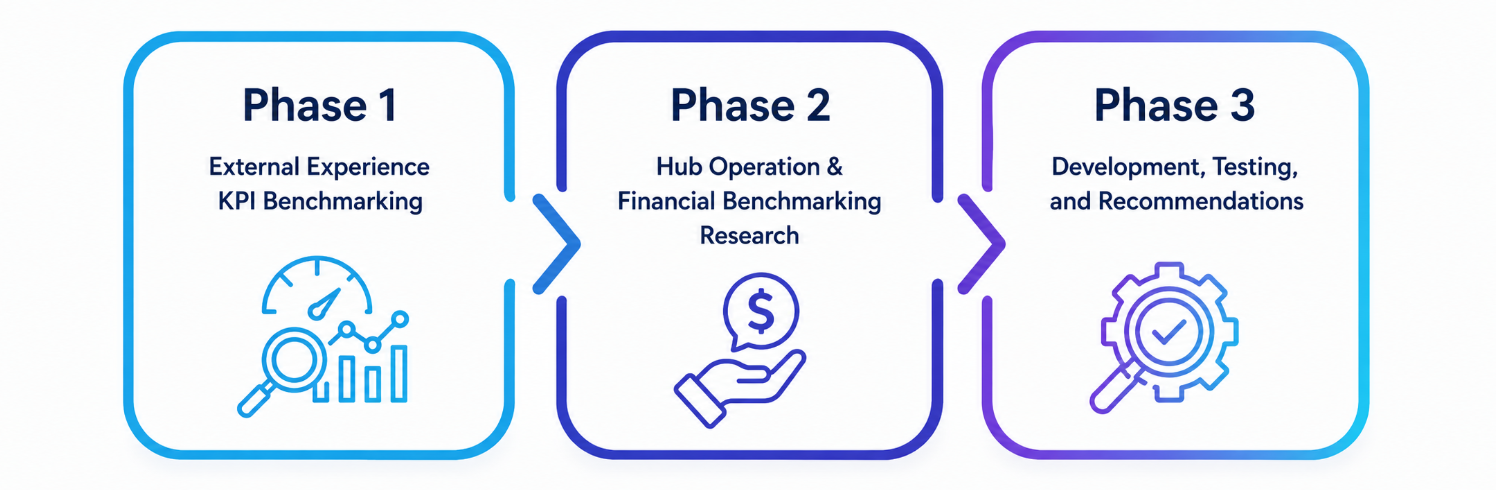
This solution equips teams with the insights needed to move beyond internal metrics and clearly understand their market position. It enables data-driven decision-making to identify optimization opportunities, strengthens the business case for investment, redesign, or scale, and fosters alignment across leadership around performance objectives and patient impact.
Our Patient Access and Support team helps organizations see the path and own the outcome by revealing the real barriers to access, uncovering the true drivers of decisions, and facilitating faster, smarter action. We bring practical experience, senior judgment, and connected cross-functional insight to help teams navigate complexity, remove barriers, and align access needs, prescriber realities, and patient support from early strategy through delivery.
With experience across patient support optimization programs, product launches, and healthcare decision-maker engagement, we create strategies and solutions that are innovative, practical, and built for real-world patient journeys. The result is a clearer path from coverage to treated patients, helping improve uptake, speed-to-therapy, adherence, and ultimately, patient outcomes.
Access industry insights, benchmarking data, and trends shaping patient services in 2026.
"*" indicates required fields