Why direct-to-patient is not one-size-fits-all

Direct‑to‑patient (DTP) strategies can take many forms, ranging from targeted pilots to fully integrated ecosystems supported by external partners. The optimal model depends on a company’s commercial maturity, technology infrastructure, and readiness to directly manage elements of the patient experience.
As manufacturers face increasing pricing pressure and adapt to new programs such as TrumpRx, many are expanding DTP capabilities to strengthen transparency, streamline access, and retain greater control over affordability levers. Organizations that tailor DTP models to their operational realities and integrate them with evolving policy requirements will be better positioned to accelerate access, enhance affordability, and build more durable patient relationships.
Take our DTP readiness assessment
Strategic pathways for implementation
Some manufacturers leveraging DTP strategies see measurable improvements in time to therapy, affordability, and patient satisfaction, all while capturing insights that inform future access decisions. However, there are multiple pathways to DTP models, and numerous considerations must be taken into account along the way.
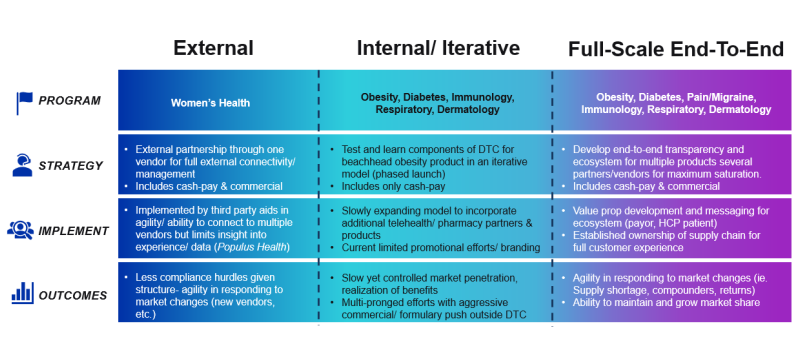
Pilot models: Testing demand and feasibility
Pharmaceutical organizations can adopt direct-to-patient strategies along a continuum of scale and control, depending on their maturity, infrastructure, and risk tolerance. Many companies start with internal pilots, focusing on limited cash pay channels or specific therapeutic areas to validate patient demand and operational feasibility. These pilots enable organizations to test critical processes such as digital access, fulfillment workflows, affordability support, and patient engagement before expanding further.
Full-scale internal build: Owning the ecosystem
Some manufacturers pursue a complete internal build, developing integrated ecosystems that connect pharmacy operations, digital care platforms, and advanced analytics capabilities. This approach supports full ownership of the patient’s experience and data insights, enabling long-term agility, greater personalization, and brand differentiation.
Partnership-driven models: Leveraging external expertise
A growing number of companies are opting for a partnership-driven approach, collaborating with established telehealth, digital retail, or third-party vendors to expedite their time to market. These partnerships offer scalability and operational flexibility while maintaining strategic oversight. Manufacturers retain control of patient data and overall experience while leveraging external expertise for execution and infrastructure.
Most favored nation (MFN) disruption: Structural reset
MFN disruption represents more than a temporary policy adjustment. It signals a structural reset in how pharmaceutical companies approach pricing, access, and patient engagement. The traditional approach, rooted in PBM rebates, payer negotiations, and indirect patient touchpoints, is no longer sufficient to ensure growth or predictability. To thrive, manufacturers must adopt models that support transparency, agility, and more direct relationships with patients.
DTP framework: Strategy connected to execution
Our direct-to-patient model provides a proven and adaptable framework to support organizations through this transition. With expertise spanning market access, commercialization, and patient services, Acumetis partners with manufacturers to design, pilot, and scale DTP solutions that align with therapeutic priorities and organizational maturity. This includes assessing readiness, selecting the correct delivery model, and building governance and analytics structures that support long-term success.
How Acumetis delivers impact
Acumetis differentiates itself by connecting strategic vision to operational execution. From mapping patient journeys and optimizing affordability programs to developing integrated pharmacy ecosystems, Acumetis translates DTP concepts into real patient and business outcomes. A cross-functional approach ensures that patient insights, commercial goals, and policy expectations support one another to create scalable, compliant, and data-informed models.
The opportunity ahead
As various market forces accelerate the shift toward patient-centric access models, the opportunity for meaningful reinvention continues to grow. Manufacturers that move early will protect margins and redefine the competitive landscape through stronger patient engagement and long-term loyalty.
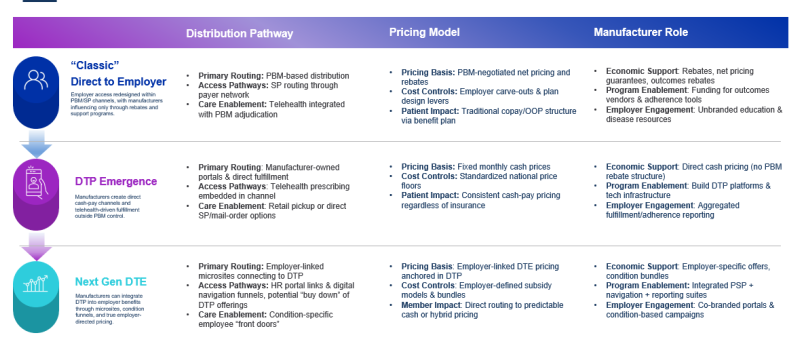
Novel infrastructure in DTP enables next-gen direct to employer (DTE)
As DTP models have gained broader acceptance, companies have built the infrastructure needed to manage pricing, fulfillment, and patient support outside traditional PBM channels. At the same time, policy changes that call for clearer pricing and greater direct accountability have encouraged manufacturers and employers to seek alternatives to rebate‑driven benefit designs.
Those two trends have created the conditions for DTE contracting, where manufacturers can plug DTP capabilities directly into an employer’s benefit experience. Employers gain more predictable pricing and clearer care pathways, while manufacturers are able to offer condition‑specific support, integrated navigation tools, and employer‑tailored affordability options. The result is a more direct, coordinated way for employers and manufacturers to shape access and cost without relying only on legacy channels.
Key takeaways
- Policy reforms demand a shift toward transparent, patient-driven models.
- Our DTP model empowers manufacturers to own the patient experience.
- DTP strategy delivers measurable improvements in affordability, access, and engagement.
- For organizations whose therapeutic focus or commercial model makes DTP a less natural fit, a DTE strategy creates a more flexible and effective route to reach patients.
Take the next step
Is your organization ready to adopt a DTP model? Take our DTP readiness assessment to evaluate your product’s fit for direct-to-patient (DTP) models by measuring the following factors:
- Access dynamics
- Behavioral readiness
- Digital e-pharmacy enablement
- Telehealth potential
In just a few minutes, the tool delivers a personalized readiness score highlighting opportunity, risk, and the strategic considerations shaping direct‑to‑patient viability. Teams also have the option to schedule a consultation with Acumetis experts to reframe what’s possible in their commercial strategy and determine the most confident path forward.
Start the assessment → DTP readiness assessment
"*" indicates required fields
Meet the Experts:

Ali Soroush

Will Sargent, MBA

Swathi Rangan

Evan Aftosmes
FAQs on direct-to-patient
What is DTE (direct-to-employer)?
How is direct-to-consumer (DTC) different from direct-to-patient (DTP)?
What benefits does a DTP model offer manufacturers?
What types of therapies fit best with a DTP approach?
How can manufacturers begin the DTP process?