Communication strategy for novel MOA in neurological disorder

Top down view of a river tributaries on sand

Optimizing communication strategies for stakeholder and scientific alignment

Our client had a molecule recognized for its efficacy in reducing innate immunogenicity, previously applied in other therapeutic areas. They sought to extend its application to a degenerative neurological disorder, which posed a significant departure from their established therapeutic areas.

The challenge

The client faced significant challenges in advancing their molecule’s clinical development for a degenerative neurological disorder due to limited data and scientific support for their unconventional therapeutic approach. In this context, they needed to identify the most efficient and cost‑effective strategy to communicate scientific rationale, engage stakeholders, and support program advancement.

The Acumetis approach

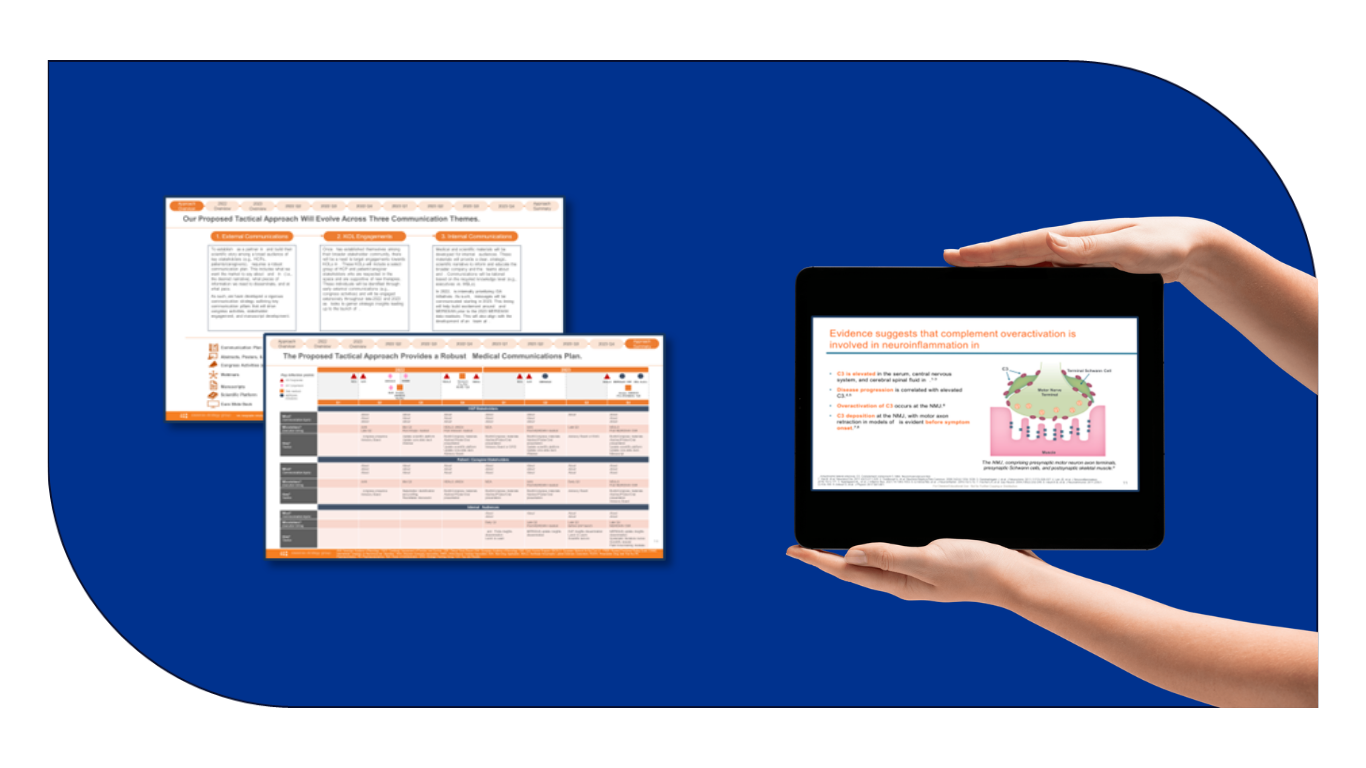
  1. Created a high-level narrative aligning the MOA with the new indication, leveraging data and aspirational statements to guide evidence generation.
  2. A communication strategy was developed, focusing on the evolution of the desired narrative over time pre- and post-data readout.
  3. High ROI activities were identified, which required strong academic KOL engagement and focused congress presentations.
  4. Advisory boards were organized with experts on disease pathophysiology and the relevance of the MOA. We identified critical biomarkers for investigation and publication to bolster the communication strategy.
  5. Key abstracts and posters were prepared for priority regional congresses, offering a cost-effective method to disseminate information to key stakeholders.

The outcome and why it worked

The approach enabled refined scientific communication through structured KOL engagement, targeted congress activity, and iterative feedback. By aligning stakeholder expectations with the evolving evidence base, the strategy strengthened scientific credibility, supported confident decision‑making, and maintained development momentum as the program advanced.

Acumetis medical affairs team

Acumetis medical affairs partners with biopharma teams to know the science and own the narrative, turning scientific strategy, evidence generation, and medical communications into credible stories that shape decisions and build confidence. Our teams anticipate evidence needs early and work across functions to ensure clinical endpoints, evidence plans, and communications are rigorous, relevant, and aligned with regulatory expectations.

Transform your market approach

We can help your team build a comprehensive communication strategy today.

Learn more

"*" indicates required fields

Learn More

Meet the Experts:

Kevin Asher
Partner and Medical Practice Lead

Kevin leads our Medical Practice at Acumetis. He is a skilled strategist, facilitator and trainer on a broad range of topics bringing a wealth of experience and knowledge from his time working in Medical Affairs to the Acumetis team. He has extensive experience helping teams develop medical strategies that drive impact within cross-functional environments.

Veronica Carson
Veronica Carson
Principal

Veronica Carson is the Director of Medical Affairs and an experienced healthcare strategist with over 15 years at Novo Nordisk and Sanofi. She has specialized in cardiometabolic diseases, rare diseases, and vaccines, with expertise spanning clinical development, medical affairs, public affairs, marketing, and sales. On the consulting side, Veronica has partnered with Novartis, Pfizer, and Johnson & Johnson, delivering strategic solutions across multiple therapeutic areas. Adept at synthesizing scientific and business intelligence, she is passionate about improving patient outcomes. Veronica holds an MBA, a Master’s in Library Science, and a Bachelor of Science, all from the University of Toronto.

FAQs on scientific communication

Why was a tailored communication strategy critical?

The novel application of the MOA required careful scientific framing to establish credibility and align expectations across stakeholders.

How did early narrative development support evidence planning?

Early clarity helped guide evidence priorities, biomarker selection, and consistency across scientific communications.

What role did KOL engagement play?

Academic KOL input validated scientific assumptions and strengthened confidence in the evolving narrative.

Why were congress activities important?

Targeted abstracts and posters enabled efficient dissemination, feedback, and awareness within the neurological research community.